
Blog
Guide

Property Searches Explained: What Are They and Why Do They Matter?
When buying a property, you may hear your conveyancer mention "searches". While they can sometimes feel like just another step in the process, property searches play an important role in uncovering information that may not be immediately visible.
Understanding what searches involve and why they matter can help you feel more confident in your purchase.
What are property searches?
Property searches are enquiries made with various authorities to gather information about a property and its surrounding area.
They are designed to highlight issues that could affect:
- The property’s value
- Your ability to use it
- Your future plans
These checks form an important part of the legal due diligence process.
The main types of searches
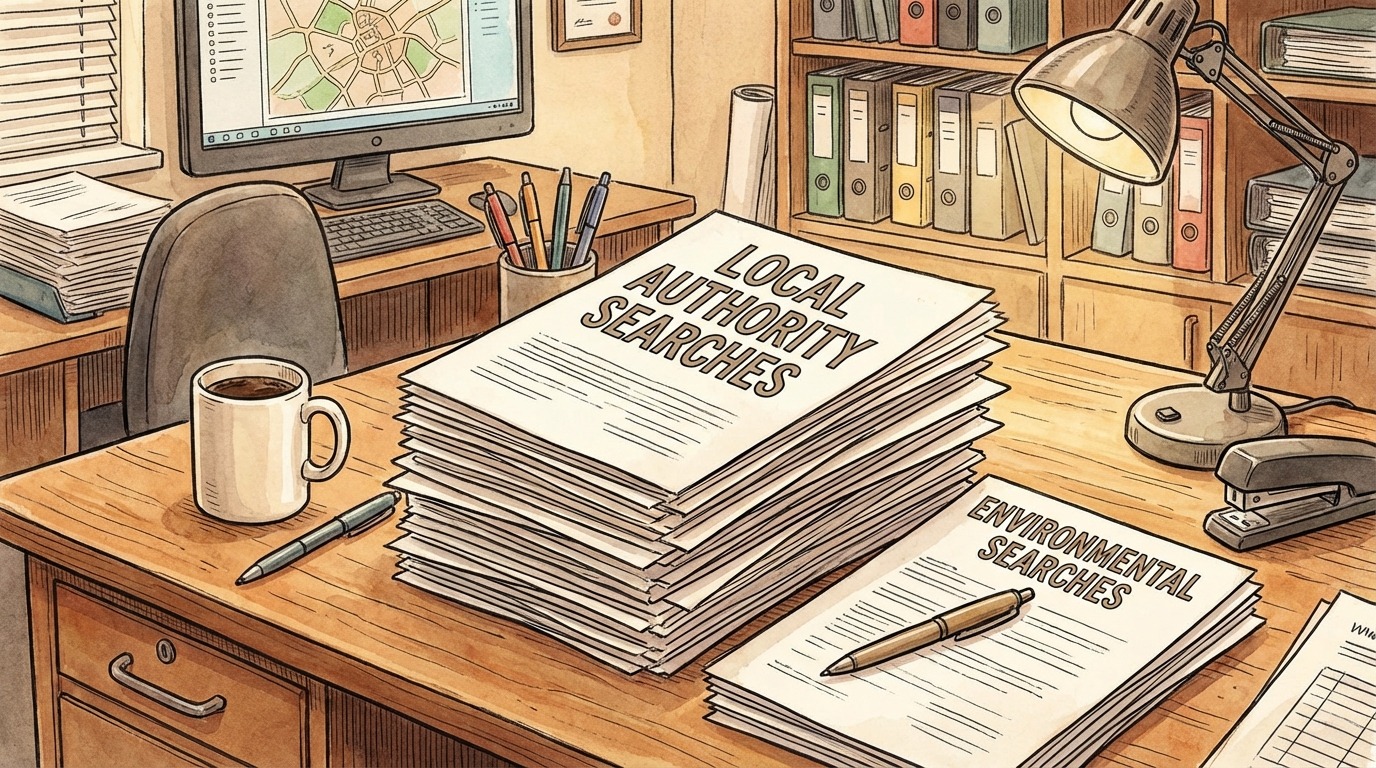
Local authority search
This reveals information held by the local council, including:
- Planning permissions
- Building regulations
- Road schemes or developments nearby
Environmental search
This looks at environmental risks such as:
- Flooding
- Land contamination
- Ground stability
Drainage and water search
This confirms whether the property is connected to mains water and drainage, and whether there are any public sewers within the boundaries.
Why are searches important?
Searches help identify potential risks that may not be obvious during a viewing.
For example:
- Planned developments nearby could affect your enjoyment of the property
- Flood risk could impact insurance and future resale
- Access or drainage issues could lead to unexpected costs
Having this information early allows you to make an informed decision.
Can you skip searches?
In some cases, particularly with cash buyers, it may be possible to proceed without searches. However, this is generally not recommended.
Skipping searches means you may miss important information that could affect the property’s value or usability. Most mortgage lenders will also require searches as part of their conditions.
What happens if something is flagged?
If a search reveals an issue, it doesn’t necessarily mean the purchase cannot proceed.
Your conveyancer will:
- Explain the findings
- Raise further enquiries if needed
- Advise on possible next steps
In some cases, solutions such as insurance policies or renegotiation may be considered.
Summary
Property searches are an essential part of the conveyancing process, helping to uncover important information that may not be immediately visible. While they can sometimes add time to the process, they play a key role in protecting your investment.
At Arrow Conveyancing, we ensure that all necessary searches are carried out thoroughly and explained clearly. Our aim is to give you the confidence to move forward, knowing you have a full understanding of the property you are buying.
Visit: www.arrowconveyancing.co.uk
Call: 0116 266 5394
Email: hello@arrowconveyancing.co.uk
Disclaimer
The materials on this website do not constitute legal advice and are provided for general information only. Whether express or implied, no warranty is given concerning such materials. We shall not be liable for any technical, editorial, typographical, or other errors or omissions within the information provided on this website, nor shall we be responsible for the content of any web images or information linked to this website.
The information contained in this article does not constitute financial advice or recommendation and should not be considered as such. Arrow Conveyancing does not offer financial advice and is not regulated by the Financial Conduct Authority (FCA). The authors of this article are not financial advisors and are therefore not authorised to offer financial advice.
Published on :
May 19, 2026



















.png)


